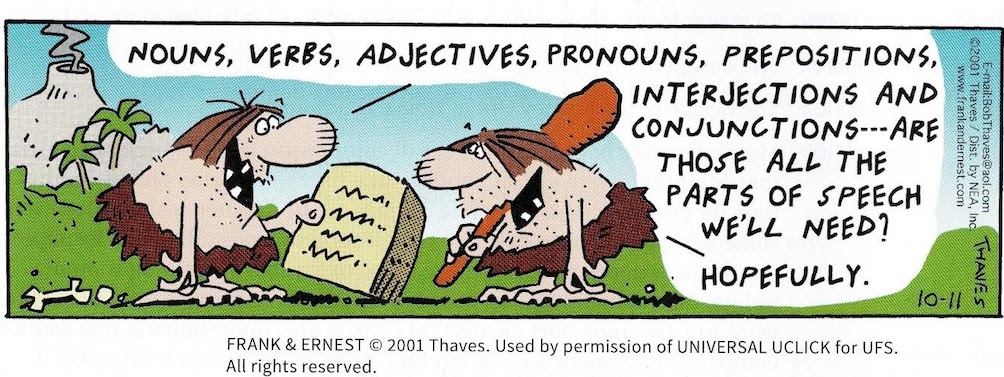
The humour of the cartoon above derives from the last word, hopefully, which is the part of speech that, rather ironically, has been overlooked - namely adverbs. How long do you think Frank and Ernest could survive without adverbs? How long do you think you could survive without using an adverb? 'Hopefully' this introduction will show just how reliant we are on adverbs and how powerful they can be.
Meet the adverb family
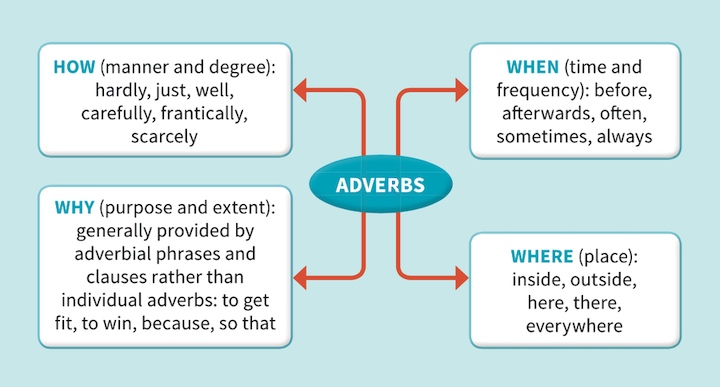
1. Adverbs are words that are generally easy to recognize because many of them end in ly or ally. Here is what they do:
- They are words that modify verbs, indicating how, when, where and why (She speaks quickly; he practices daily; I've been there).
- They are also used to intensify other adverbs (They finished the course remarkably quickly!)
- They are also used to intensify adjectives (He is insanely jealous).
2. Adverbial phrases perform in the same way as adverbs. They tell us how (e.g. with care, in a hurry); when (before dusk, in time for dinner); where (under the awning) and why (to help Mum).
3. Similarly, adverbial clauses tell us how (as if his life depended on it); when (when we got home); where (where the grass is greener); why (because they were tired).
In summary, adverbs tell us HOW, WHEN, WHERE, WHY about verbs, adjectives and other adverbs.